
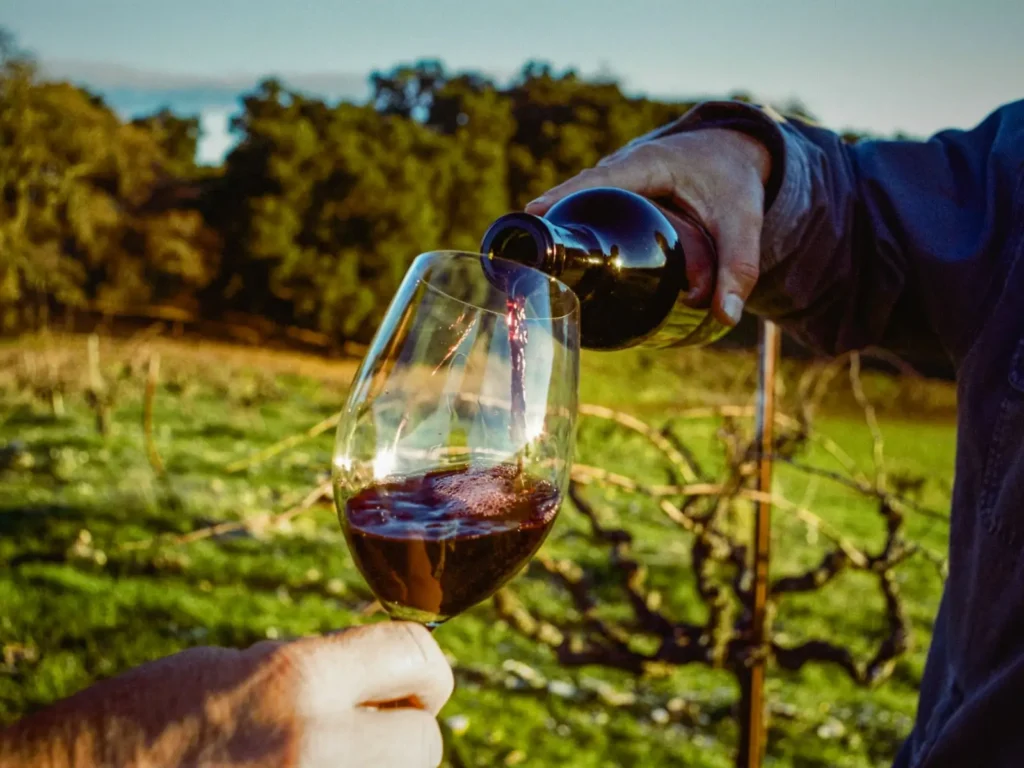
For decades, the global wine conversation was dominated by a handful of regions that relied on historical prestige. But luxury isn’t always found in a dusty archive. More often, it’s in the dirt. In the limestone-rich hills of the Willow Creek District, a new chapter of American winemaking is being written, one defined by authentic, bold, and expressive red wines that challenge the status quo.
With the air cooling over the Central Coast, our focus shifts to the cellar. The winter season is for red wine, but not the mass-produced, predictable bottles found on every supermarket shelf. It is a time for rediscovery and understanding how a specific patch of earth on Vineyard Drive has redefined what a California red blend can be.
The Limestone Legacy: Why Terroir Matters
To understand the red wines of Westside Paso Robles, you have to start underground. The Linne Calodo name itself is a tribute to the soil: a complex, calcium-rich limestone that defines our estate.
Most vineyard soils are acidic, but our limestone is alkaline. This geological quirk does something miraculous to the vine: it stresses the plant just enough to keep yields low and flavors concentrated, while naturally preserving high acidity. In the wine world, we call this “tension.” It’s the reason a Linne Calodo red can be massive in fruit flavor yet finish with a refreshing, mouth-watering lift. When you drink a wine from the Willow Creek District, you aren’t just tasting grapes; you are tasting the ancient seabed that rose to become these hills.
The Templeton Gap: Nature’s Air Conditioner
Paso Robles is known for its sun, but the red wines of the Westside owe their elegance to the dark. Our vineyards sit in the path of the Templeton Gap, a series of coastal mountain breaks that allow cool Pacific Ocean air to rush inland every evening.
This dramatic “diurnal shift”, where temperatures can drop by 40 or 50 degrees in a single night, is essential for high-quality red wine production. It allows the grapes to “rest” on the vine, developing complex phenolics and deep colors without losing their structural integrity. It is this balance of intense heat and coastal cooling that makes our Rhône-style blends so balanced and age-worthy.
The Art of the Blend: Breaking the Varietal Mold
While much of the world is obsessed with single-varietal wines like Cabernet Sauvignon, we have always found beauty in the assembly. At Linne Calodo, we believe that the whole is greater than the sum of its parts.
Winemaker Matt Trevisan views blending as a form of high-stakes architecture. By combining the floral lift of Grenache, the savory muscle of Syrah, and the heritage spice of Zinfandel, we create a wine that is more handcrafted and three-dimensional. This isn’t winemaking by a recipe; it’s an intentional response to what Mother Nature gave us in a specific vintage. Each bottle tells a story of that year’s rain, sun, and wind.
Nature-Positive Farming: Beyond the Buzzwords
We believe that the most authentic wines are grown, not made. This is why we’ve moved away from the generic “organic” or “sustainable” labels in favor of what Matt calls “nature-positive farming.” It’s a return to the “hard way” of doing things, which happens to be the right way. Instead of chemical herbicides, we use hand tools.
Instead of carbon-burning mowers, we herd sheep to manage our cover crops. We emphasize dry-farming techniques that force the vines to send their roots deep into the limestone in search of moisture. This minimal-intervention approach ensures that the wine in your glass is a pure reflection of the land, free from the “pretentious speak” and chemical manipulation common in industrial winemaking.
Navigating the Paso Robles Landscape
For many visitors, the Paso Robles winery landscape can feel overwhelming. With over 200 tasting rooms, it’s easy to get lost in “tourist cliches.” However, the savvy wine enthusiast looks for the unique experience, the “bang for your buck” that comes from intimacy rather than scale.
A visit to Vineyard Drive offers a departure from the crowded, commercialized tasting rooms of larger regions. Here, the experience is personalized. Whether you are a “wine newbie” or a seasoned collector, the focus is on education and connection. We want you to see the cellar, smell the fermenters, and understand the bold passion that goes into every limited-production bottle.
The Winter Table: Pairing Bold Reds
December is a month of culinary indulgence, and our wines are designed to pair well with food. The expressive fruit and structural tannins of a blend like Overthinker or Nemesis make them versatile partners for winter fare.
- Rhône Blends: Pair with herb-roasted lamb or smoked duck to highlight the savory, peppery notes of the Syrah.
- Zinfandel-Driven Blends: These thrive with rich, fatty meats like prime rib or even a spicy winter chili, where the wine’s natural acidity cuts through the richness.
- The Experience: Remember, wine is about the atmosphere. The best pairing for a Linne Calodo red is a roaring fire and good company.
The Future of Paso Robles Red Wine
As we look toward the future, the goal isn’t to become bigger; it’s to become more precise. Paso Robles has already graduated from an “unproven” region to a global powerhouse. The next step is a deeper commitment to the land.
By continuing to prioritize soil health, water conservation, and winemaking innovation, we ensure that the Willow Creek District remains a sanctuary for those seeking bold, expressive, and authentic wines. We aren’t interested in following trends; we are interested in making wines that will still be singing ten, twenty, or thirty years from now.
Experience the Cult of Blends
Rediscovering red wine in Paso Robles is about more than just what’s in the glass. It’s about a philosophy that respects the unpredictability of Mother Nature and the precision of the human hand.
We invite you to step away from the generic and discover the handcrafted excellence of the Westside. Whether you’re joining us for a tasting on Vineyard Drive or opening a bottle at your own holiday table, you’re part of a community that values substance over style.
Shop Our Current Releases | Join the Bottle Club
FAQs
What makes the Willow Creek District unique for red wine?
The combination of high-elevation limestone soils and the “Templeton Gap” cooling effect allows grapes to achieve full ripeness while maintaining high natural acidity, resulting in balanced, bold wines.
Does Linne Calodo offer tastings for non-members?
Yes! While our Bottle Club members receive priority and complimentary tastings, we welcome all visitors by reservation. Walk-ins are accepted based on availability.
What is “Nature-Positive” farming?
It is a holistic approach to viticulture that avoids synthetic chemicals, utilizes sheep for weed control, and emphasizes dry-farming to create a healthier, more self-sustaining vineyard ecosystem.
Why does Linne Calodo focus on blends instead of single varietals?
We believe blends offer a more complete and expressive “portrait” of our terroir. By combining different grapes, we can achieve a complexity and balance that a single varietal often cannot reach on its own.